Practice Improvement
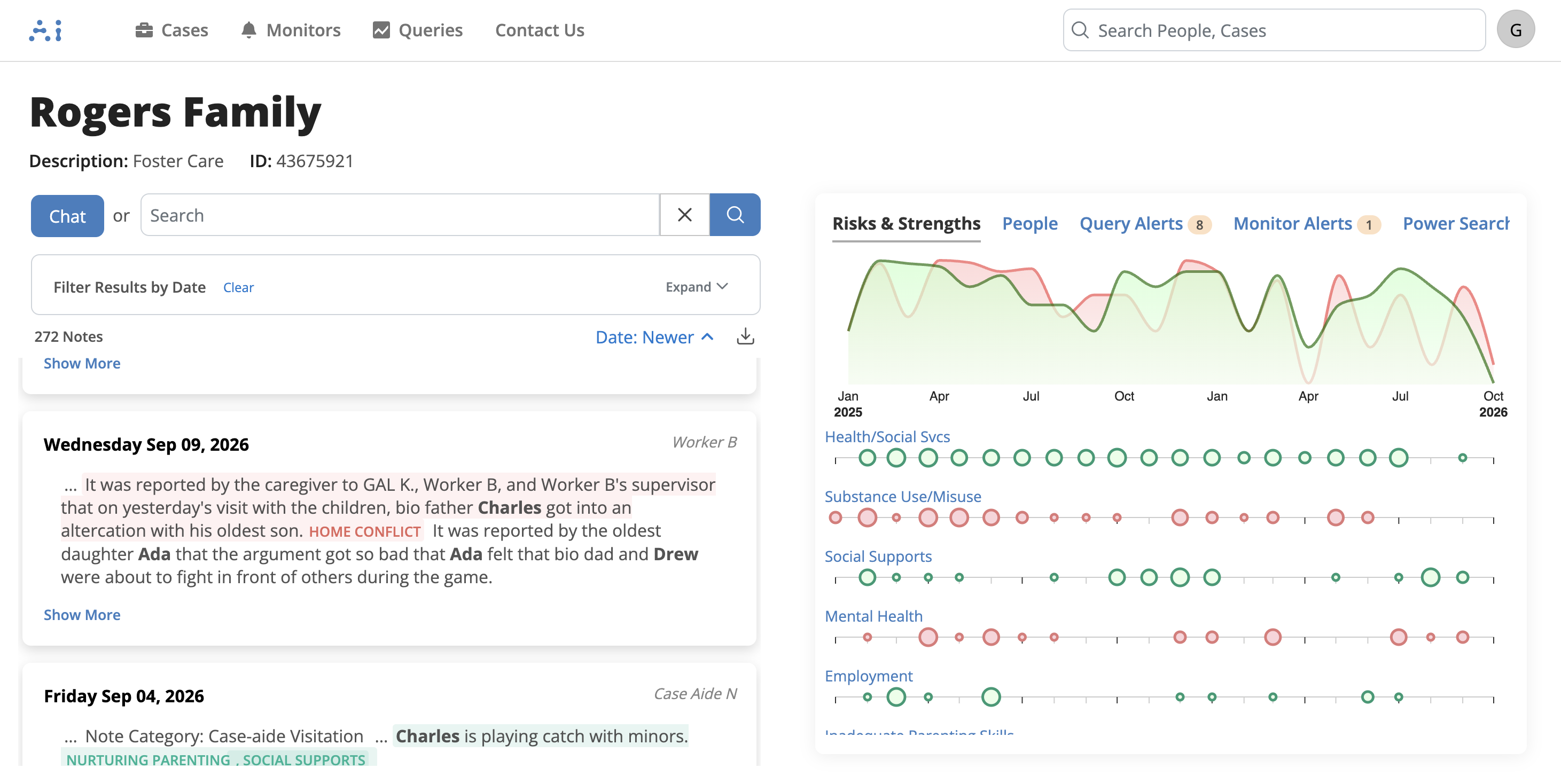
What Child Welfare Case Notes Can Show Us at Scale
Anyone who has worked in child welfare remembers certain children. I still think about a teenager I visited while he was living in a detention facility several hours away.
Learn how Maryland DHS uses AI to analyze the case notes their workforce was already writing →


Explore industry trends and practical insights on how data, technology, and AI are shaping the future of child welfare.
Anyone who has worked in child welfare remembers certain children. I still think about a teenager I visited while he was living in a detention facility several hours away.

Maryland DHS used AI to review nearly 2,000 child welfare case files in 60 days. See what it found, how it worked and how to get started.

Technology can surface information that might otherwise be difficult to find and help investigators build a more complete picture of a case.

At APHSA ISM in Spokane this year, the conversations around AI in child welfare are dramatically changing.

How AI-powered narrative analytics helped Massachusetts' child welfare team find a home that kept four siblings together, and how it’s changing what agencies can see in their case records.

Allegheny County’s caseworkers had rich data buried in notes. Now they can find it in seconds.

Natural Language Processing can do what has traditionally required significant human effort: read and analyze free-text and other forms of written data.

Nearly 6 years ago the CCWIS Final Rule was published, and with it, a lot of excitement about how technology could support practice in child welfare.

Becoming more data-driven requires more than analyzing the structured data already captured in agency systems.
We're concerned about a trend that converts more information into structured fields via checkboxes and drop-down menus.

Child welfare agencies have long experienced higher-than-average turnover, but some jurisdictions report turnover rates as high as 60%.

Child welfare professionals dedicate their lives and careers to making sure children and families in their communities are safe.





In child welfare, there’s no substitute for the judgment, experience, and dedication of caseworkers. We believe AI is a support tool – not a replacement – for that expertise. Our AI uses natural language processing to analyze case notes, identify patterns, and surface warning signs. All to help caseworkers better serve children and families.
© 2026 Augmented Intelligence Technologies, Inc.