
Illinois DCFS Uses Augintel to Uncover Bias
The Office of Racial Equity Practice at DCFS could track investigations, placements, and permanency outcomes.
Learn how Maryland DHS uses AI to analyze the case notes their workforce was already writing →



January is Human Trafficking Prevention Month, an opportunity to raise awareness about the prevalence of human trafficking in the United States and the work needed to combat it.
According to Hope for Justice, an organization dedicated to ending human trafficking globally, more than 1 million people in the United States are victims of human trafficking. As a mother of tweens and teens, and a former child welfare caseworker, I find that number alarming. I also recognize that my children benefit from a network of parents, grandparents, and siblings who are actively involved in their lives. Not every child has that support.
Young people in foster care face particular risks. Nearly one-third of youth in foster care run away from their placements, with an average age of just 15. Meanwhile, 40% of youth aging out of foster care experience homelessness as young adults.
Youth who go missing from foster care and those transitioning out of the system are especially vulnerable to exploitation and human trafficking. Limited support networks, housing instability, and disrupted relationships can increase those risks.
Child welfare agencies are working to address these systemic challenges through strategies such as kinship placements, incorporating the perspectives of young people with lived experience, and prioritizing safe and stable homes. These efforts are essential, but agencies must also have the tools and resources to identify and respond to trafficking.
Efforts to identify and prosecute human traffickers have increased significantly. Over the last decade, the number of traffickers brought to justice each year has more than doubled.
During my time at DHS in Allegheny County, I saw firsthand the work of investigators dedicated to finding missing youth and building cases against those exploiting them. Their work demonstrated the importance of having access to timely, relevant information to support investigations.
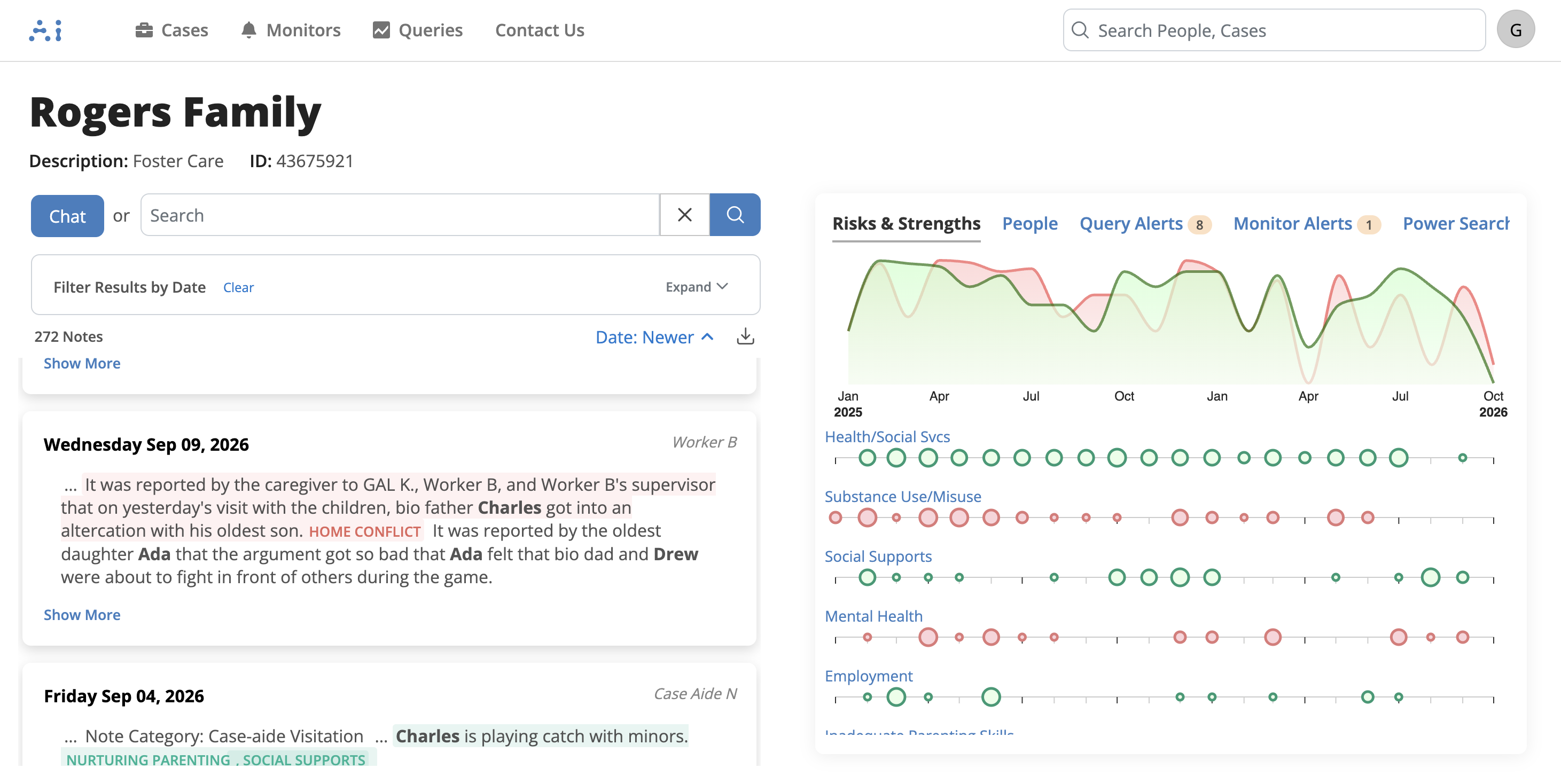
Human services technology can play a role in that process. At Augintel, we focus on helping agencies make better use of the information they already have to improve decision-making and outcomes.
Recently, a CSEC (commercial sexual exploitation of children) Case Manager shared this feedback about Augintel:

This is an important example of how technology can support frontline professionals by surfacing information that might otherwise be difficult to find and helping investigators build a more complete picture of a case.
There is more work to do. Augintel will continue exploring ways our technology can help agencies locate missing youth, support investigations, and build cases against those responsible for exploitation.
I challenge my colleagues across the Human Services IT Advisory Group (HSITAG) to consider how their organizations and solutions can contribute to this effort.
Human trafficking is a complex problem that requires coordinated action across child welfare, law enforcement, and the technology community. We should all be asking: What can we do to help identify, prevent, and respond to human trafficking?
It will take a collective effort, and the human services technology community has a role to play.


Becoming more data-driven requires more than analyzing the structured data already captured in agency systems.

Nearly 6 years ago the CCWIS Final Rule was published, and with it, a lot of excitement about how technology could support practice in child welfare.

Natural Language Processing can do what has traditionally required significant human effort: read and analyze free-text and other forms of written data.




In child welfare, there’s no substitute for the judgment, experience, and dedication of caseworkers. We believe AI is a support tool – not a replacement – for that expertise. Our AI uses natural language processing to analyze case notes, identify patterns, and surface warning signs. All to help caseworkers better serve children and families.
© 2026 Augmented Intelligence Technologies, Inc.