
Illinois DCFS Uses Augintel to Uncover Bias
The Office of Racial Equity Practice at DCFS could track investigations, placements, and permanency outcomes.
Learn how Maryland DHS uses AI to analyze the case notes their workforce was already writing →



Workforce shortages are a growing challenge across the country, but the problem is particularly acute in human services. Child welfare agencies have long experienced higher-than-average turnover, but vacancy rates and sustained staffing shortages have made the situation increasingly concerning. Some jurisdictions report turnover rates as high as 60%, putting additional pressure on agencies and creating significant risks for the children and families they serve.
There are many reasons behind the workforce crisis. Child welfare is demanding, stressful work, and many people enter the profession with a passion for helping children and families. Too often, however, they find themselves spending more time meeting administrative and regulatory requirements than providing direct services. Heavy caseloads, paperwork, limited time, and sometimes unsafe working conditions all contribute to burnout and turnover.
Addressing this crisis requires a comprehensive approach, but technology has an important role to play.
The National Child Welfare Workforce Institute (NCWWI) developed its Workforce Development Framework to help agencies take a holistic approach to workforce health. Technology is an important part of that equation.
Modern technology should do more than automate existing processes. It should fundamentally improve how child welfare professionals access information, manage their work, and support families.
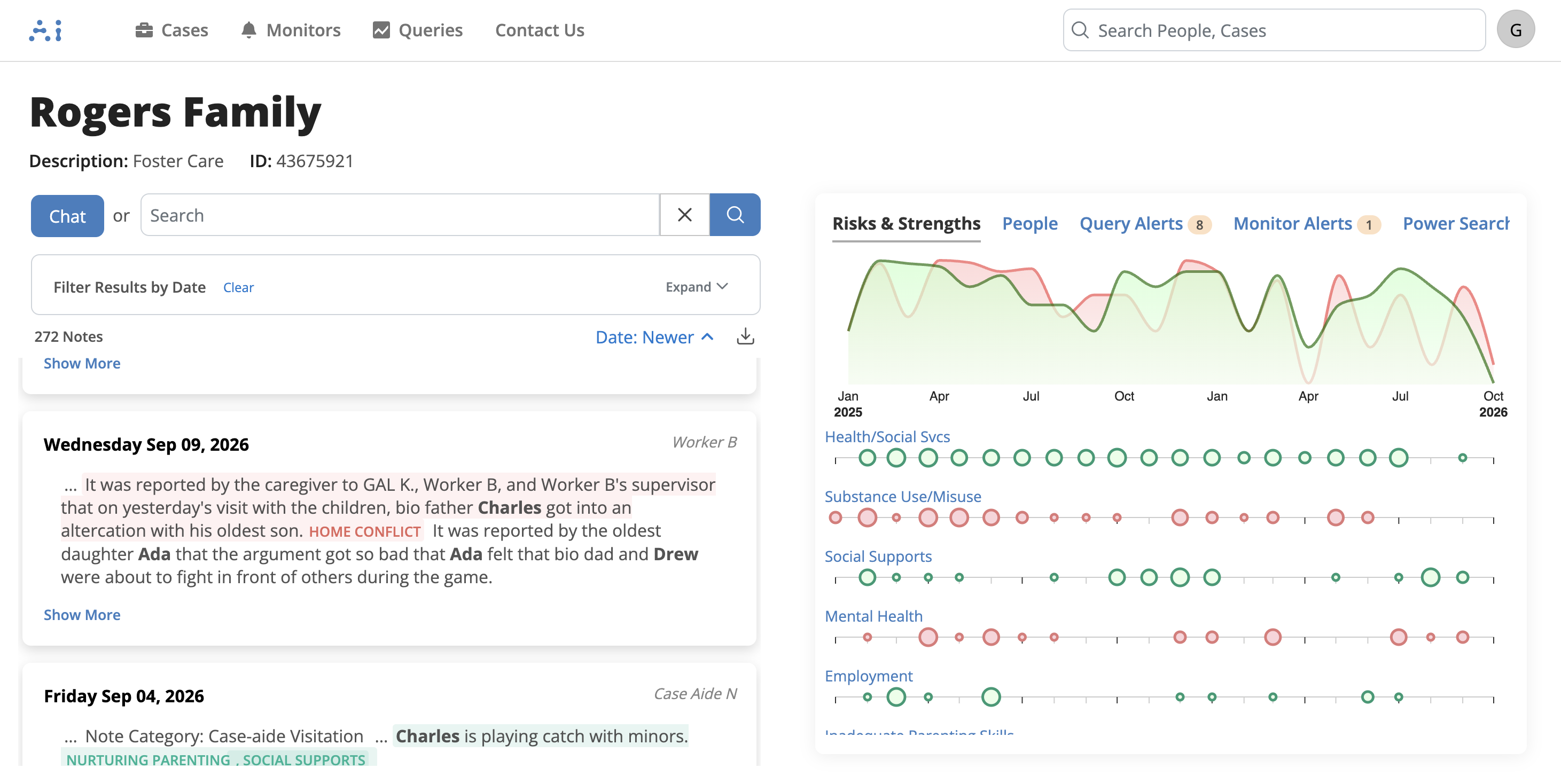
Natural Language Processing (NLP) is one example. Caseworkers often face years of case notes and other documentation that can be difficult and time-consuming to review. NLP can analyze this information and surface relevant insights, helping workers build a more complete understanding of a family's circumstances without manually reading every record.
This allows technology to handle more of the information-intensive work while leaving the critical decisions and human interactions to professionals.
At Augintel, we work with agencies to identify how our technology can support their organizational goals. When we map Augintel's capabilities to the NCWWI Workforce Development Framework, several opportunities stand out:
New generations of workers expect modern tools that support their work and reduce unnecessary administrative tasks. Technology can help agencies create a more effective employee experience.
NLP can be incorporated into training and ongoing professional development, helping workers understand how to use technology to improve their practice and build confidence.
Supervisors can access relevant information to better support their teams, identify opportunities for coaching, and monitor alignment with practice requirements.
NLP solutions can often be implemented alongside existing systems, allowing agencies to improve the value of their technology investments without undertaking costly, large-scale system replacements.
Reducing the time spent searching through case records and completing information-intensive tasks gives workers more time to focus on families.
Providing workers with effective tools can reduce frustration, improve job satisfaction, and help address some of the factors contributing to turnover.
Technology investments should reinforce established child welfare practices and help workers apply them more consistently.
Better-equipped workers and better-informed supervisors can foster greater collaboration, improve support across teams, and contribute to a healthier workplace.
Technology alone cannot solve the child welfare workforce crisis. Agencies must also address leadership, organizational culture, compensation, safety, supervision, and the many other factors that influence workforce retention.
However, technology can provide meaningful and relatively immediate relief. NLP can reduce administrative burden, make critical information easier to access, and give caseworkers and supervisors better tools to do their jobs.
That relief matters. Giving child welfare professionals more time and better information to serve children and families is not just an operational improvement. It's an investment in the workforce and the quality of services agencies provide.
At Augintel, we're committed to helping agencies make that investment and finding practical ways technology can improve the experience of the people doing this important work.


How AI-powered narrative analytics helped Massachusetts' child welfare team find a home that kept four siblings together, and how it’s changing what agencies can see in their case records.

Allegheny County’s caseworkers had rich data buried in notes. Now they can find it in seconds.




In child welfare, there’s no substitute for the judgment, experience, and dedication of caseworkers. We believe AI is a support tool – not a replacement – for that expertise. Our AI uses natural language processing to analyze case notes, identify patterns, and surface warning signs. All to help caseworkers better serve children and families.
© 2026 Augmented Intelligence Technologies, Inc.